A field guide for artists of any media.
Most books about creativity describe a process. This one describes a place.
It is a guide for building your own habitat within the creative environment. And it is a problem-solving tool, pointing towards solutions to artistic challenges and growth.
Artist and educator Neal Von Flue offers a map rather than a method: a diagram—part Venn and part color wheel—built from the three forces that shape our creative lives. Where they overlap are the secondaries; the vibrant areas where a medium gets pushed past its limits, where artists work in brave isolation, and where we meet our own fear or find our strengths. Where the three primaries mix is the rich soil that every artist can rely on to grow their most accessible and impactful works.
Part theory and part field guide, this handy reference book charts the whole environment, explains how it can be used, sets it alongside established models of creativity, and closes with more than thirty practical exercises for tuning your own mixture and pulling works into balance.
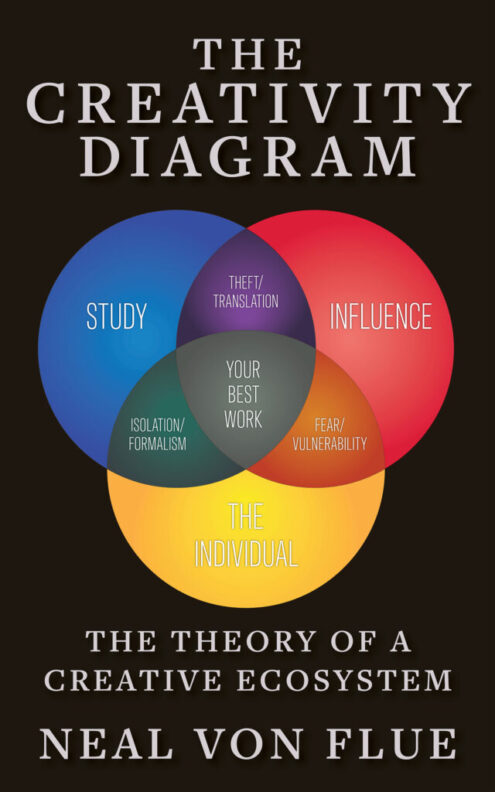
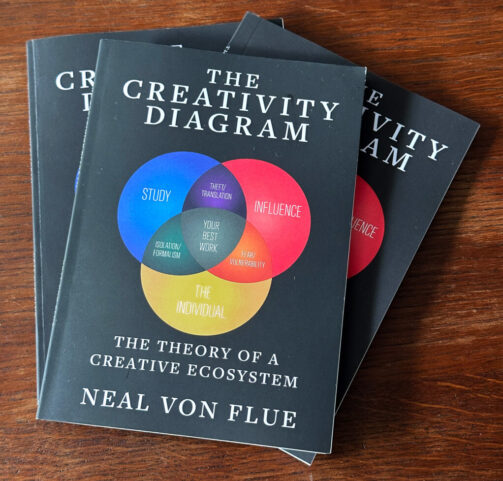
Get a copy
The Creativity Diagram is available in print and digital formats wherever you get books including Amazon and Barnes & Noble.
About The Author
Neal Von Flue is an artist, educator, and writer living in Southern California.
He has been a multidisciplinary teacher for nearly two decades, focusing on Studio Arts, Digital Media, and Art History.
In 2025, he published a retrospective of his work called Sweeping Up After the Party is Over. It includes painting, sculpture, sketches, and works of fiction.
The Creativity Diagram is an effort to condense years of studio work, teaching, and process introspection into a practical, easily understood, and reliable method for thinking about your work.
You can see his portfolio or contact him at nealvonflue.com.